Notes
- 01 August 2026
- 8 min read
About creating the film
The basic idea arose from several discussions with friends about the evolution of our society, coupled with seemingly endless technological progress. This led to the question of whether survival without technology is even possible anymore. Of course, this question is not new and is asked by every new generation, for it touches on a fundamental problem of our existence in the quest for freedom and security. This topic kept me occupied for several months. I decided to write a story about it, just to clear my head for the time being. In this first story, a young man from a conventional family decides to live in the woods, far away from civilization, for as long as possible.
Fall 2009
The idea that a boy living in the wild could simply be found in the forest reignited my interest in the subject. His path would be fraught with the same problems, but his fate would be more mysterious. The resulting sense of disorientation seemed to me to symbolize our youth.
At the end of the year, I received the news that I had been selected for a fellowship. The condition for receiving it was an artistic residency in Garbisdorf in the Altenburger Land region. Doreen Schweikowski supported me with production and recording. We were delighted to decide to accept the fellowship and take advantage of this opportunity. During our visit to the sponsors of the scholarship at the Lindenau Museum in Altenburg, we immediately noticed that the area had a wonderful charm and could serve as the filming location for the project, which was still titled „Waldjunge“.
Winter 2009
By then, I had accumulated a stack of notes. While writing the screenplay, I was able to adapt the story to the local setting. I also incorporated several passages from the original story, such as the pizza story and Dana, or the arguments with the parents. The final script came together thanks to constructive feedback from close friends.
June 2010
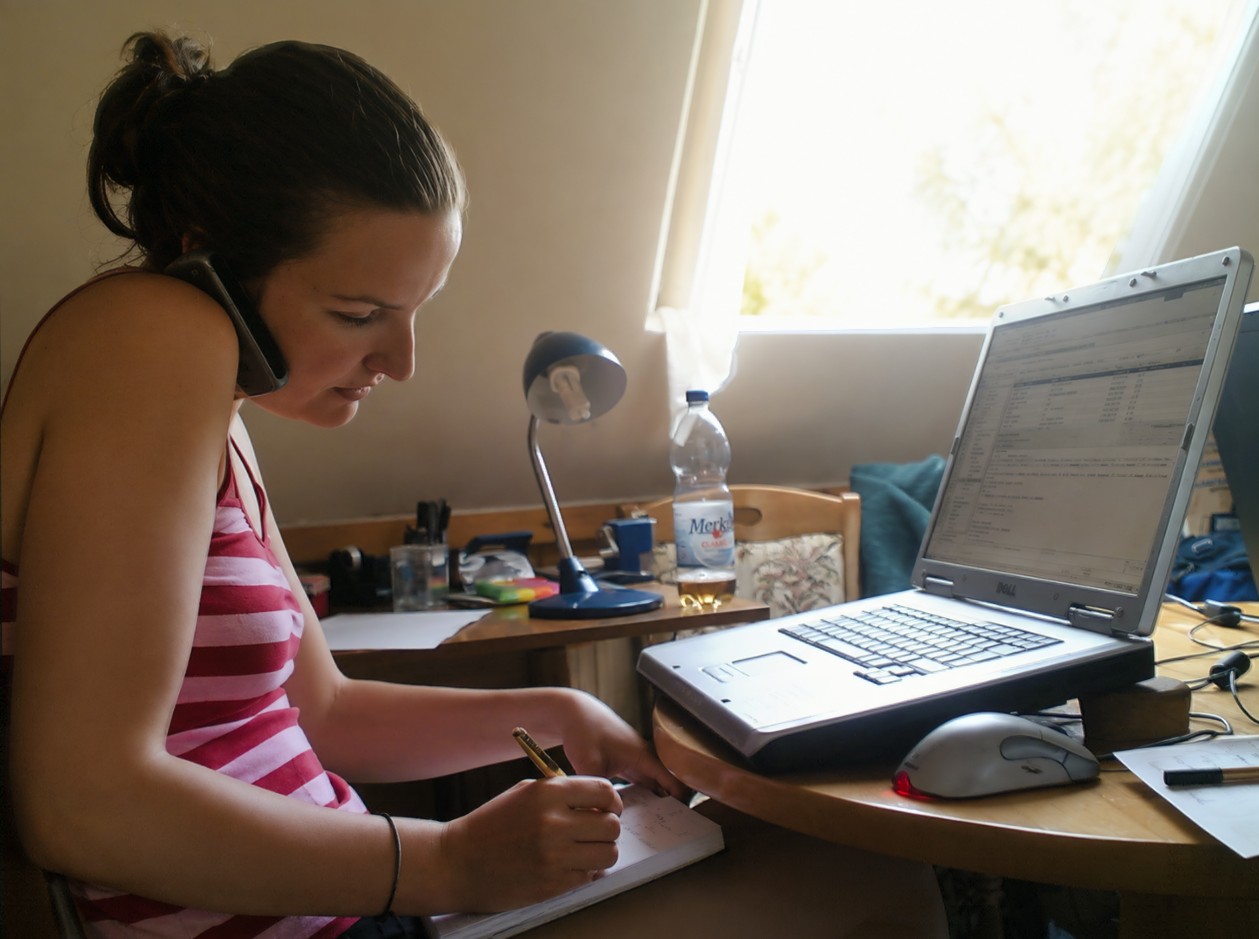
A few weeks before filming began, Doreen and I moved into a guesthouse in Garbisdorf that would later serve as accommodations for the crew and actors. From then on, it was a nonstop cycle of making phone calls, doing research, scouting potential filming locations, and organizing equipment - all while it was 30°C in the shade. A week before filming began, our cinematographer Matthias Engmann joined us and immersed himself in camera techniques and location scouting. The fact that we were somehow able to pull off the production in the end was due above all to Doreen’s unwavering dedication, but also to the active support of the village community, which, among other things, provided us with several transport and film vehicles and an entire house.
19 July
First day of filming. The village center, the Quellenhof - a huge, historically restored four-sided farmstead - served as the hub of our project. Here we were able to set up props and a wardrobe, eat, store equipment, gather and discuss plans, rehearse, and relax after a day’s work.
20 July
We were supposed to shoot a lot of outdoor scenes that day, but working in the forest was harder than we’d expected. The sun was blazing, there were endless swarms of mosquitoes, the equipment was a hassle, and our concentration soon began to wane. We were still missing three key scenes when the sun - and with it, our scene lighting - finally set around 9 p.m. Back at the Quellenhof, there was plenty to do, as new actors had arrived and their camp needed to be set up. When I finally fell into bed at 3 a.m., I was seriously worried about whether we’d even be able to finish the shoot.
The next eight days flew by. The circumstances pushed the entire team to their limits, but the collaboration couldn’t have been better. Eric Bouwer, playing Erik, portrayed his role so convincingly that he motivated us all. Milton Welsh, playing the father, always brought good cheer to the set with his very open and humorous manner, and Maria Schuster, playing the boys’ mother, made for a wonderful collaboration with her calm demeanor. Together with the open, likable Michael Jassin as Frank, the four of them demonstrated fantastic chemistry.
Matthias Engmann, behind the camera, was someone I had to trust without a monitor. We had agreed on a specific look beforehand, but we shot all the scenes without knowing the final locations. As a result, the images often came about spontaneously.
22 July
Shortly before we started filming the police search operation, it began to rain cats and dogs. We had arranged to meet with the local fire department, which kept its promise to support us. We shot the six takes in three hours. Everyone worked with full dedication despite the darkness and rain, allowing our actors to fully immerse themselves in the scene.
26 July
First day of shooting with our child actors Paul Schröder and Maximilian Gärtner. For me, working with them was a challenge, since I had never worked with children in front of the camera before. Paul played his part with impressive enthusiasm. It quickly became clear that, even though he had never stood in front of a camera before, he had no inhibitions. The role of young Erik was, of course, the deciding factor in the film’s credibility. With him, it wasn’t so easy for me to gain his trust and full concentration - which is understandable for a boy his age. On the one hand, his performance was always tinged with a touch of defiance, and he occasionally seemed distracted; on the other hand, his character’s traits were precisely disorientation, absent-mindedness, and mistrust. In contrast to his open-hearted on-screen brother, his performance naturally took on a somewhat alien quality.
30 July
Last take in Altenburg for the marriage bed scene. Well-deserved applause for Milton Welsh and Maria Schuster! But there wasn’t a minute to spare, since the studio scenes in Weimar had to be organized. Still, we enjoyed the evenings around the campfire at the Quellenhof - I’ve rarely been so exhausted and happy at the same time.
10/11 August
Finally, the studio and pizza scenes were in the can. The next day, we shot the underwater scene in cold rain and wind - really unpleasant - but thanks to his bathrobe, Eric was up for it.
December 2010
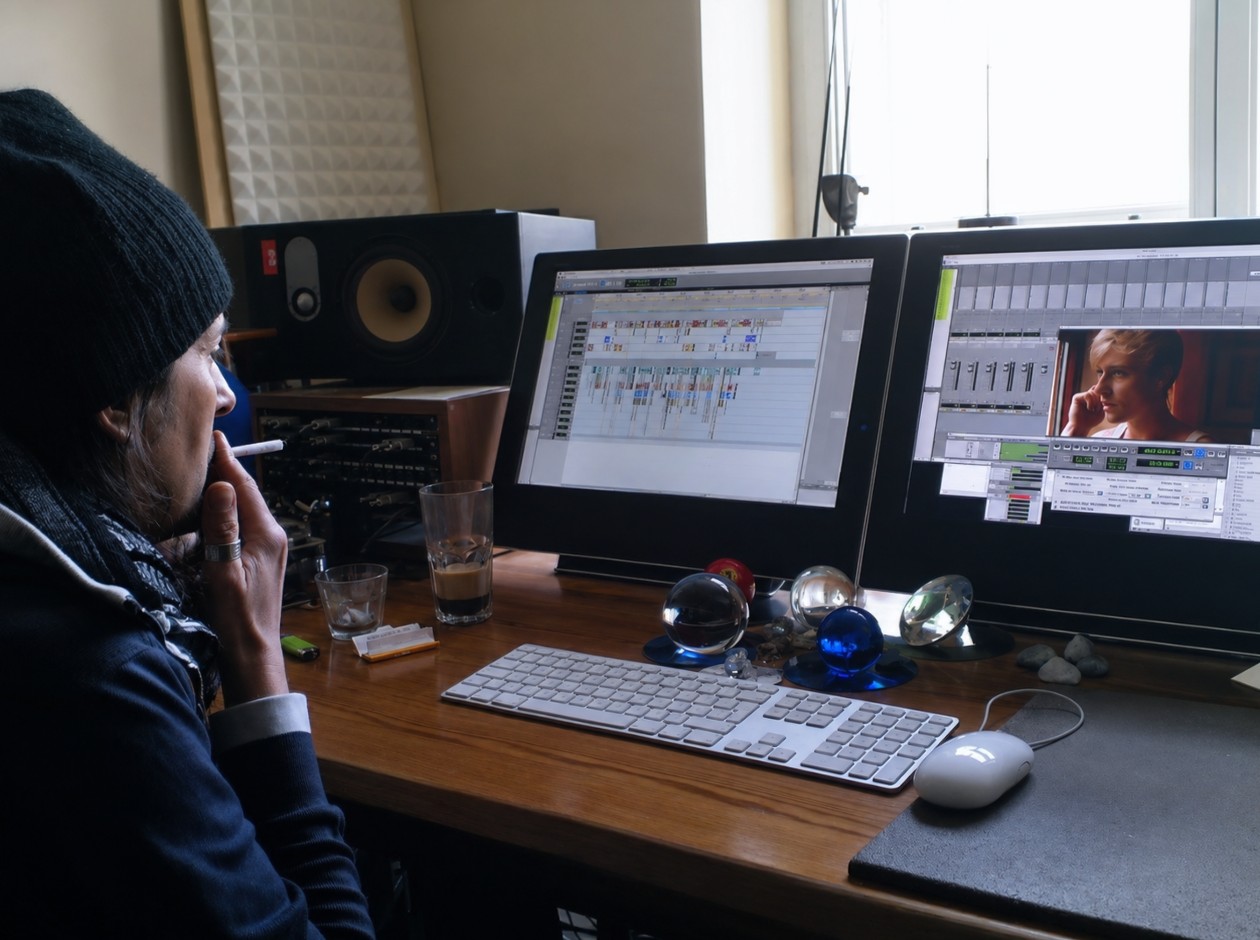
The first cut. I showed the result to several friends and realized that it didn’t work at all when watched as a whole. To bring the film together as a cohesive whole and to highlight the connections between the young and older Erik more clearly, I decided to split the first part - featuring the young Erik - into flashbacks within the second part of the film - and suddenly everything made much more sense. The narrative begins with Erik’s questions, and we accompany him on his journey of self-discovery. The connection between the past and the present unfolds only gradually.
At the end of the year, I had asked Tommy Feiler to compose the music for „Draußen“ and had only given him a rough idea of Erik’s vibe - nothing specific. Without having seen the film up to that point, he came back with six tracks, all of which I was able to incorporate into the second cut without any changes. His atmospheric music - composed of distorted, hand-recorded guitar sounds and digitally arranged synth sounds - gave the film its final touch.
In closing, I’d like to start by thanking the „Friends and Sponsors of the Lindenaustipendium“ for this unique opportunity to shoot a medium-length feature film. I’d also like to thank the wonderful people of Garbisdorf and Göpfersdorf for their support - they welcomed us and our idea with open arms and always actively helped us overcome any challenges we faced. And, of course, I’d like to thank both the actors and the entire crew who went along for this wild ride. I’ll always remember those two weeks of filming as an extraordinary time filled with so many wonderful moments, new experiences, and the feeling of being able to do something truly special.
Erfurt, April 2011.
