Designing the Characters
- 15 April 2026
- 5 min read
 Winni
Winni
- 15 April 2026
- 5 min read
... but also somewhat stubborn, otherwise you wouldn't buy into their story. I made several sketches on paper to figure out what they should look like. I based my drawings on the physical characteristics of small children: short limbs and a relatively large head.
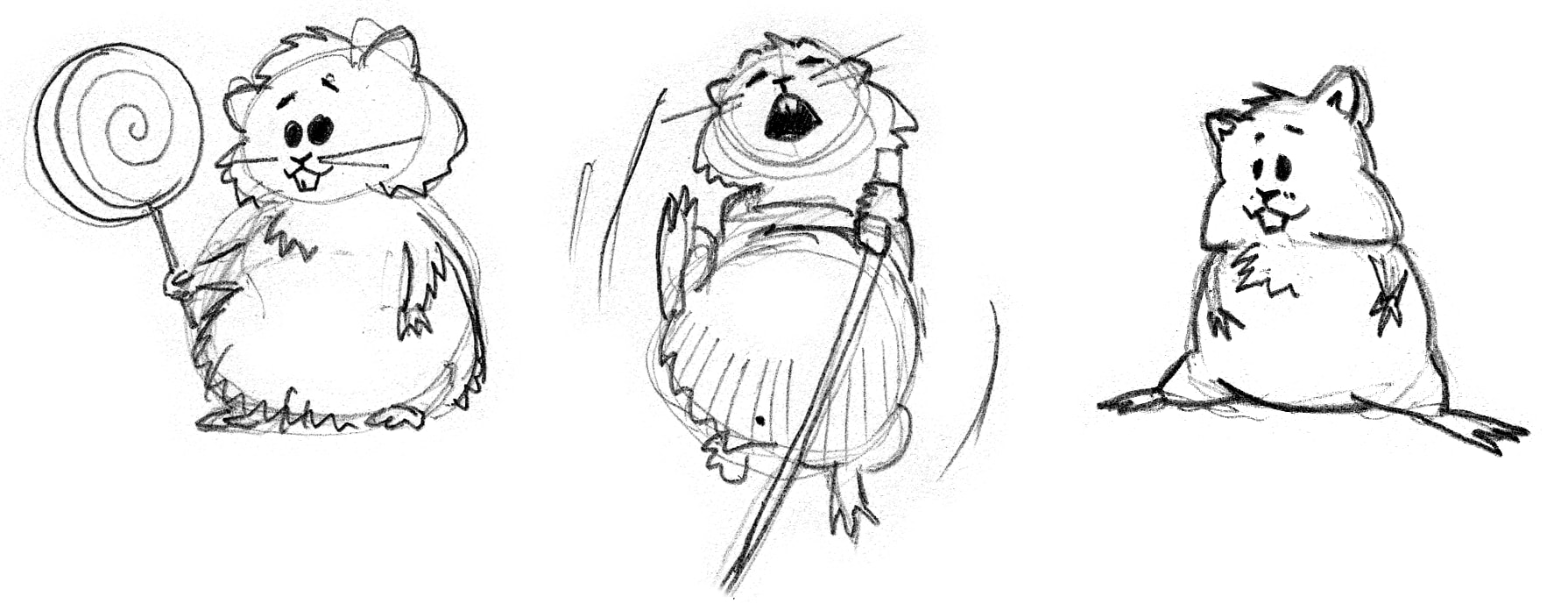
This design immediately evokes associations with peers in children, which helps them identify with the character, while adults instantly feel their protective instincts kick in. I chose not to include human eyes - that is, white eyeballs with irises and pupils.
On the one hand, every rodent has eyes that are completely black on the outside, so human eyes would feel just as out of place as talking animals. On the other hand, I found that the range of emotional expressions conveyed by wide and narrowed eyes, in combination with the eyebrows and mouth, was sufficient for my purposes.
Based on the finished basic model, I developed a unique design for each hamster, drawing on their contrasting characteristics:
- Ralle: smart, determined, with leadership ambitions, cool
- Bolle: greedy, rather impulsive, a follower, gullible
Their physical differences are mainly in the details. Overall, Ralle suited a sharper look, while Bolle’s should appear rounder. From this, I was able to develop motion studies and different facial expressions, what is known as a model sheet:
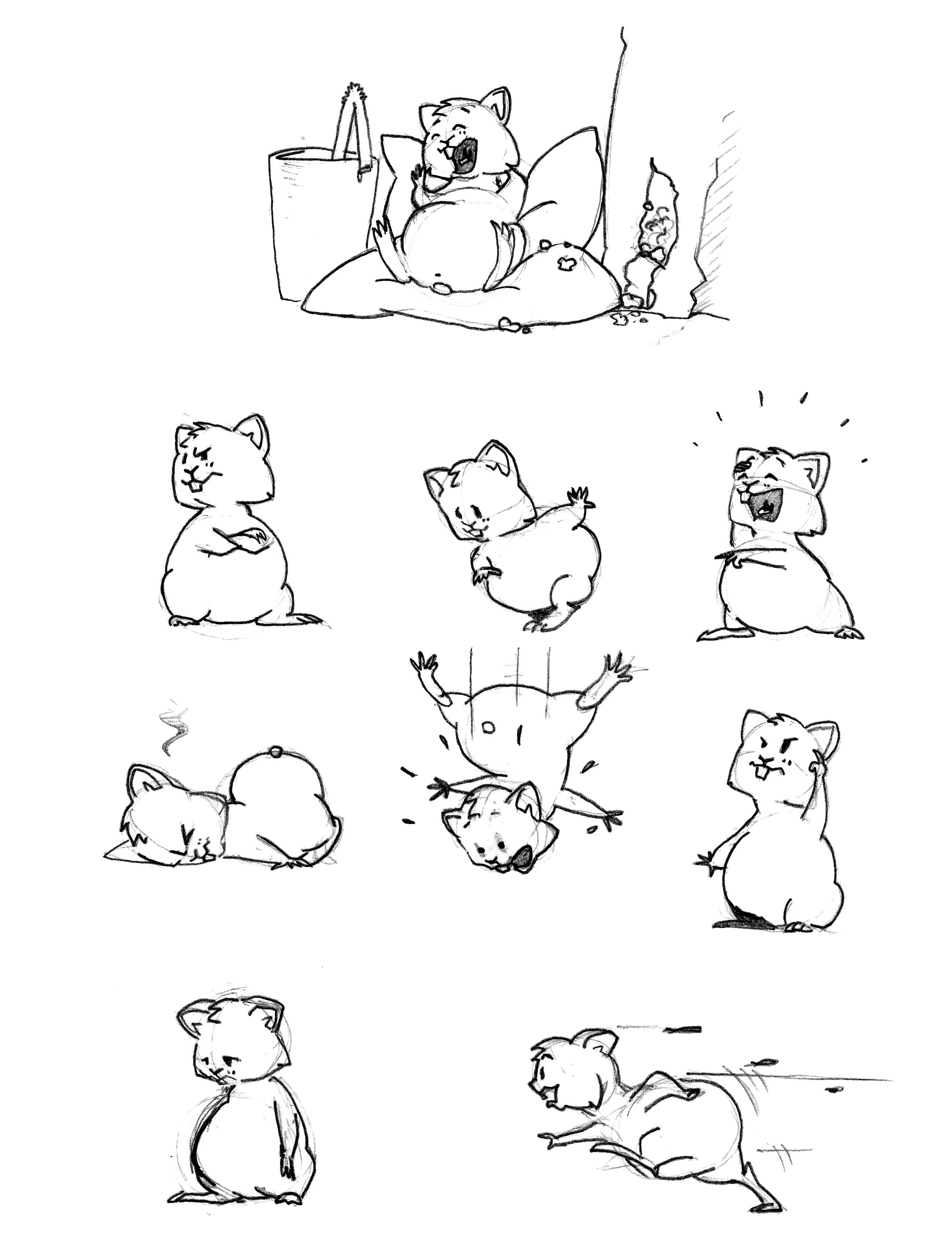
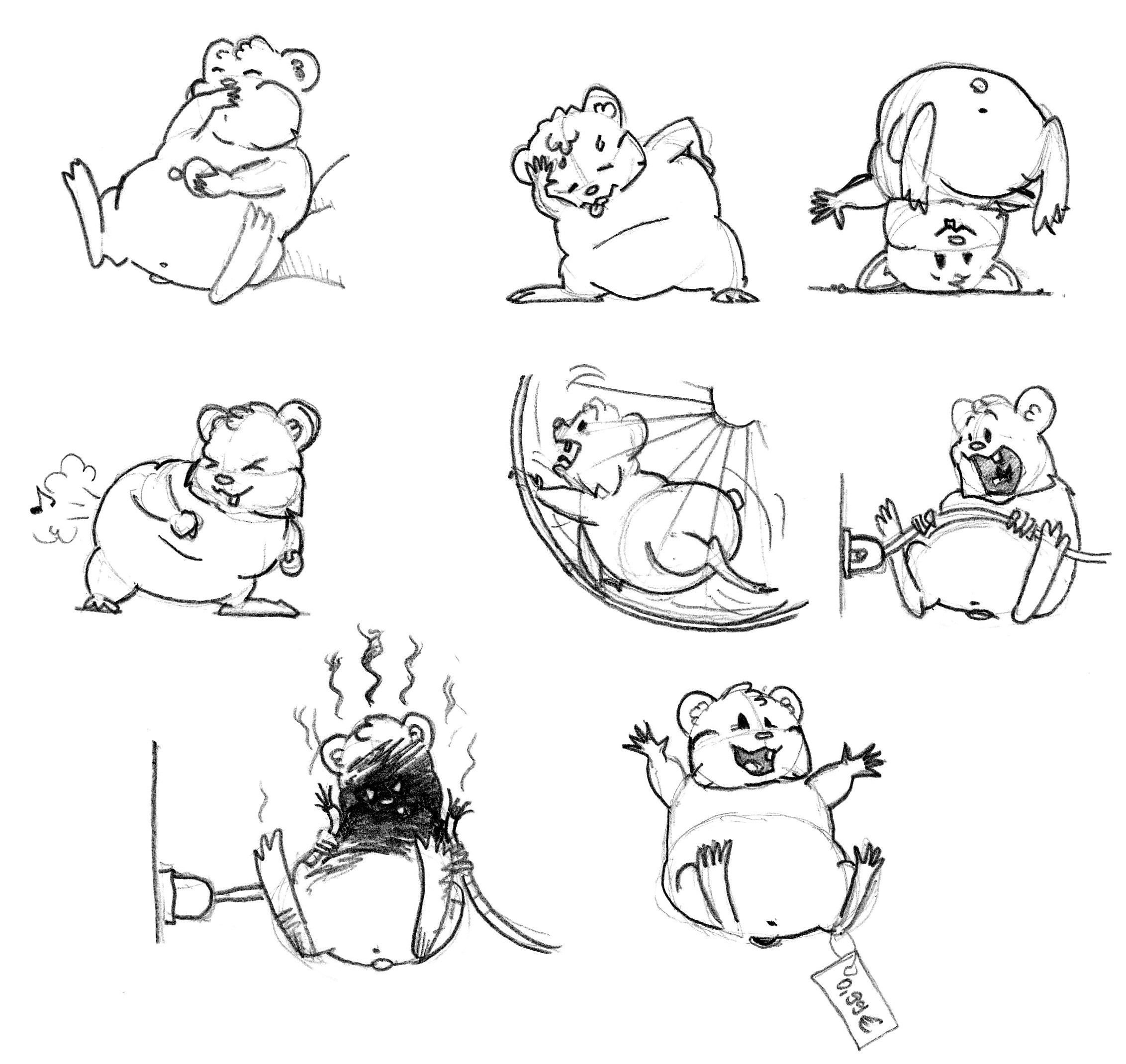
It struck me that, despite their short legs and round bodies, the two of them must have been quite flexible. That turned out to be important for the animation later on.
3D Modeling on PC
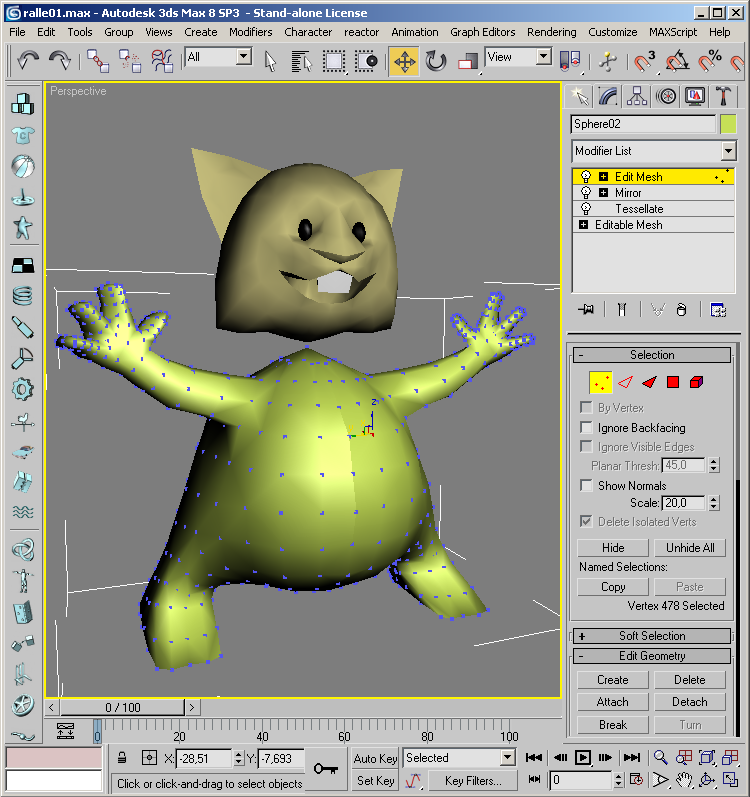
The hamster sketches now had to be recreated as virtual figures on the computer. For this, I used the program 3D Studio Max. Essentially, the base model consists of two modified spheres. Here, too, I built this up into the respective hamster, always guided by the preliminary sketches. The spheres formed a very rough wireframe, which was refined to give the body a more rounded shape. I then worked out the further details from there.
I wasn't sure whether the legs would still work when in motion. A hamster's hip and knee joints aren't clearly visible; instead, they're more or less hidden within the body. However, because of the soft skin in that area, they can still be moved easily. I wanted to replicate that.
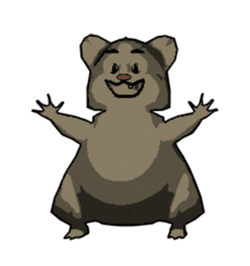
At this point, the geometry of the models shouldn't change any further, so they were ready for animation. Once that was finished, I made a few final tweaks. They needed to be textured - that is, „painted“ - and they needed fur.
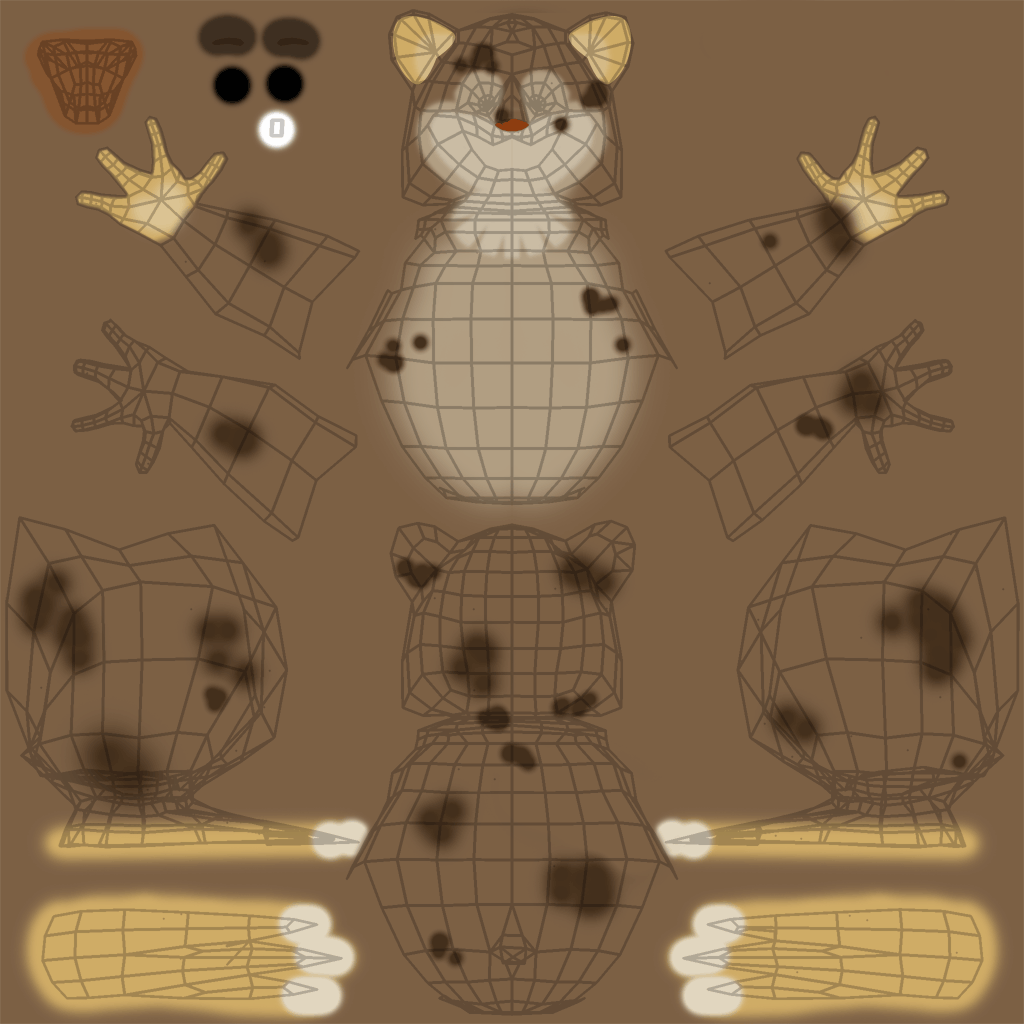
To create the texture, I broke the models down into individual parts and arranged them side by side so that I could „map“ a 2D image onto them. The information about which body part corresponds to which texture section is stored in an unwarp map, allowing me to reverse the breakdown. Here is the finished map with a polygon grid:
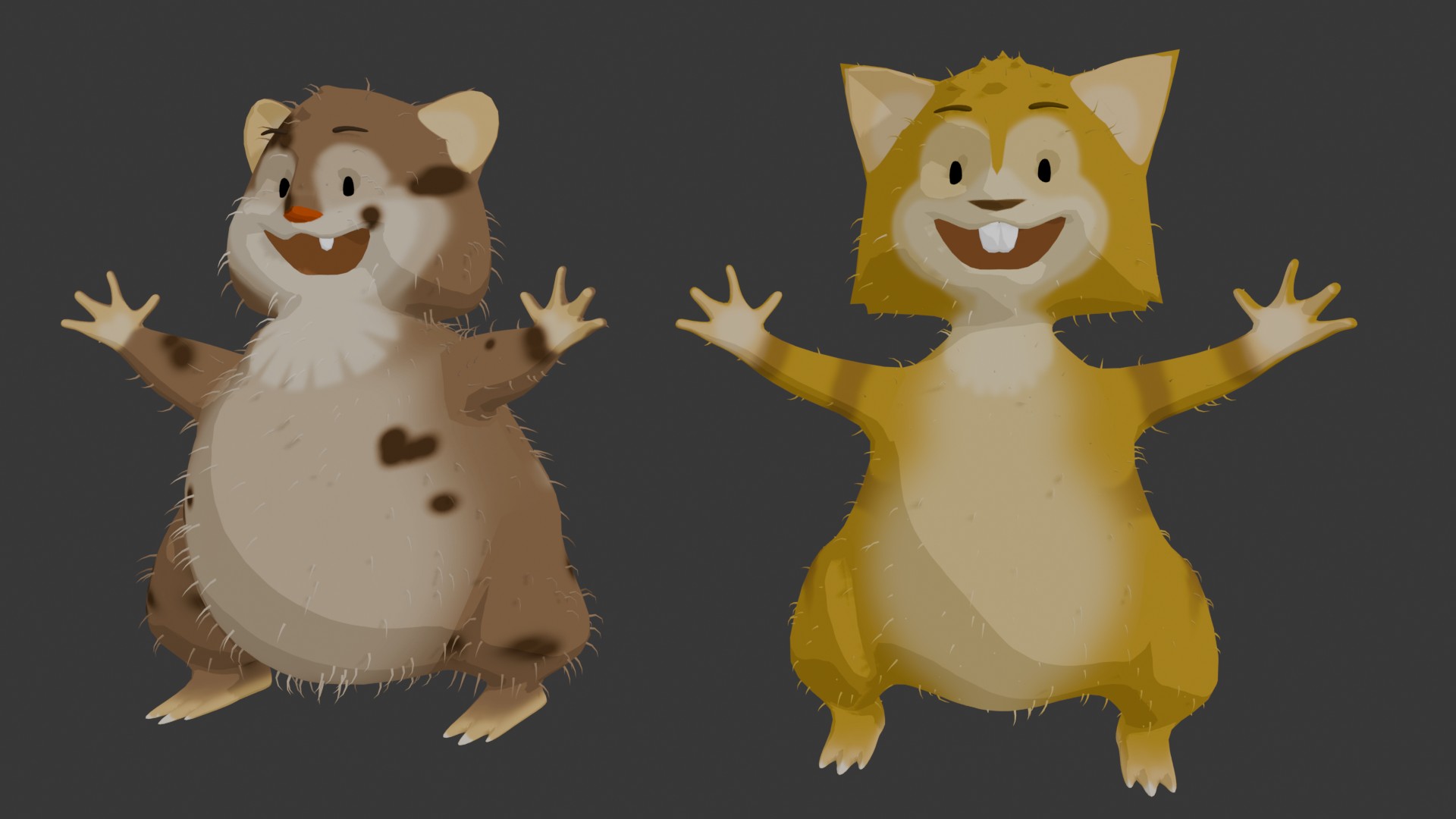
For the final look, I wanted the two of them to look more like cartoon characters. To achieve this, I used „cell shaders“ - materials that essentially look like drawn outlines and flat areas of color in various shades of brightness. However, I didn’t want the outlines to be smooth; instead, I wanted them to have a hint of fur, which I achieved by adding a few strands of hair sticking out from the body. This gave them more vitality.
And now that three films featuring these two characters have been made, a few more small details have been added here and there. For one thing, we’ve smoothed out the rough geometry using subdivision surfaces. The fur texture has also been revised several times. But the work was worth it, because the result is these two heroes right here: